



It starts with the soil.
Crop rotation and natural approaches to soil fertility help farmers build healthy growing systems.

Our approach
The pieces we wear closest deserve a little more thought. For Stonekin, that starts with soft organic cotton, considered cuts and essentials you want to wear again.
Here is what organic cotton means, why we choose it, and how to understand the standards behind it.
01 / The fibre
Organic cotton is cotton grown to organic farming standards. These systems support soil health and biodiversity, avoiding genetically modified seeds and prohibited synthetic pesticides and fertilisers.
Crop rotation and natural approaches to soil fertility help farmers build healthy growing systems.
Organic refers to the way the cotton is grown. Softness and breathability also depend on the yarn, knit, finishing and fit.
We choose organic cotton as part of a thoughtful approach to materials. Environmental impact still varies by farm, region and production process.
02 / Against your skin
Underwear stays close all day. We choose cotton for its natural feel, then consider the shape, seams and stretch that make a pair comfortable to live in.
A smooth cotton fabric can feel comfortable against skin. A good fit matters just as much: it should feel secure without digging in.
Cotton is a breathable, moisture-absorbent fibre. That everyday comfort is a property of cotton, whether organically or conventionally grown.
Our cotton-rich styles include elastane for stretch and ease of movement. Check each product’s composition for the exact blend.
03 / Understanding certification
We work with a GOTS-certified manufacturer and choose organic cotton for our everyday essentials. Manufacturer certification and finished-product certification are different: a product claim must be supported by certification covering that particular item.

The Global Organic Textile Standard covers the processing of textiles made with certified organic fibres. It sets requirements for chemical inputs, environmental management and human rights, including working conditions, with independent certification through the supply chain.
GOTS mark shown to identify the standard explained here.
Explore the GOTS standard
OEKO-TEX offers several standards. STANDARD 100 tests textiles for harmful substances; it does not by itself mean cotton is organic. ORGANIC COTTON adds verification of organic cotton and its supply chain, with testing for pesticides, genetically modified cotton and other harmful substances.
OEKO-TEX mark identifies the standards explained here, not a blanket certification of our range.
Understand the OEKO-TEX standardsMade for your everyday
Explore organic cotton essentials in the cuts and colours that feel like you.
Everyday bottoms, bralettes and bodysuits.
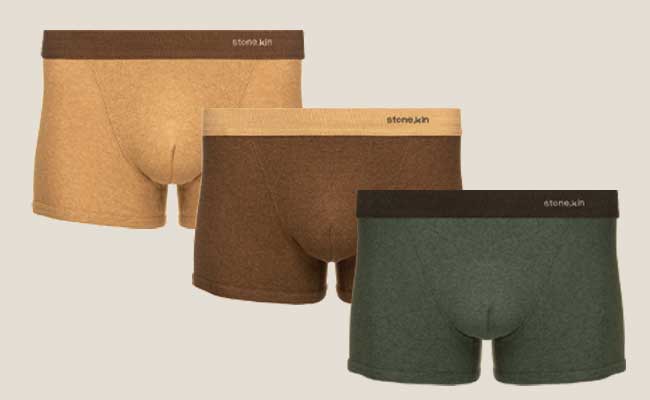
Boxer briefs, trunks and briefs for your daily rotation.